Categories
blog writing cheat-codes

Decoding feedback: “You could make this more active.”

Sum­ma­ry What they said “You could write this more active.” What it means “I’m falling asleep here! Use a more punchy, quick nar­ra­tive!” Applic­a­ble to Action scenes, ris­ing ten­sion. Notes to self It’s not only about using active over pas­sive voice, but also get­ting rid of glue words, using punchi­er verbs, and using short­er and quick­er sen­tences. Mind punc­tu­a­tion signs; em dash, com­mas, semi­colon, period—they all rep­re­sent dif­fer­ent “pause lev­els.” Always read out-loud, or use a text-to-speech read­er to mea­sure the sen­tence flow. Exam­ple Before After More Resources Active Sen­tence Struc­ture by The Write Site Exam­ples of Active and Pas­sive Voice by YourDictionary.com Share this Relat­ed posts Self-pub­­lish­ing my Debut Nov­el Just for the Thrills  Bud­get­ing for my Self-pub­­lished Book (First Try)  The Hunt for a Wicked Book Cov­er  World­build­ing Tips: Cre­at­ing Immer­sive Worlds with a Wiki 

Summary

What they said
“You could write this more active.”
What it means
“I’m falling asleep here! Use a more punchy, quick narrative!”
Applic­a­ble to
Action scenes, ris­ing tension.

Notes to self

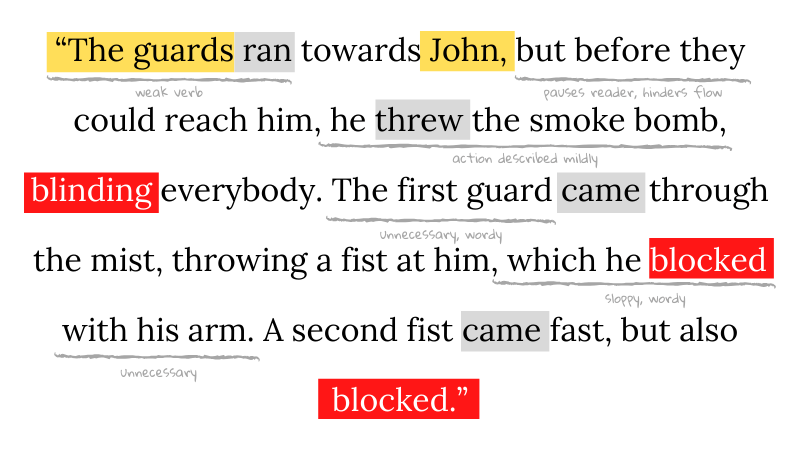
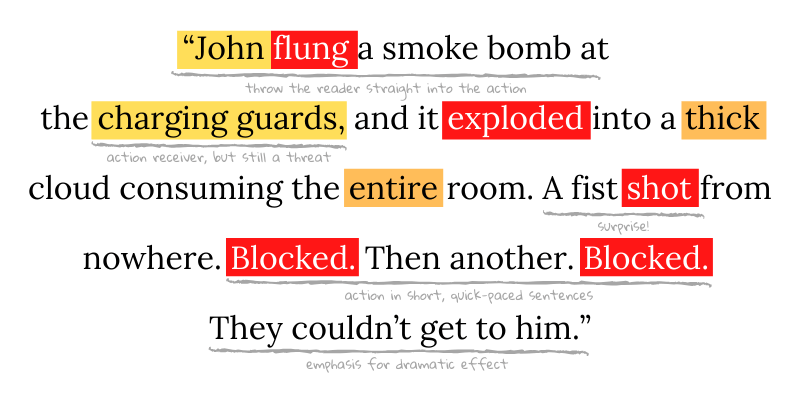
It’s not only about using active over pas­sive voice, but also get­ting rid of glue words, using punchi­er verbs, and using short­er and quick­er sen­tences. Mind punc­tu­a­tion signs; em dash, com­mas, semi­colon, period—they all rep­re­sent dif­fer­ent “pause lev­els.” Always read out-loud, or use a text-to-speech read­er to mea­sure the sen­tence flow.

Example

Before

After

More Resources

Share this